

Responsible E-Waste Disposal: 3 Smart Steps for Pros
Why Responsible E-Waste Disposal Matters More Than Ever
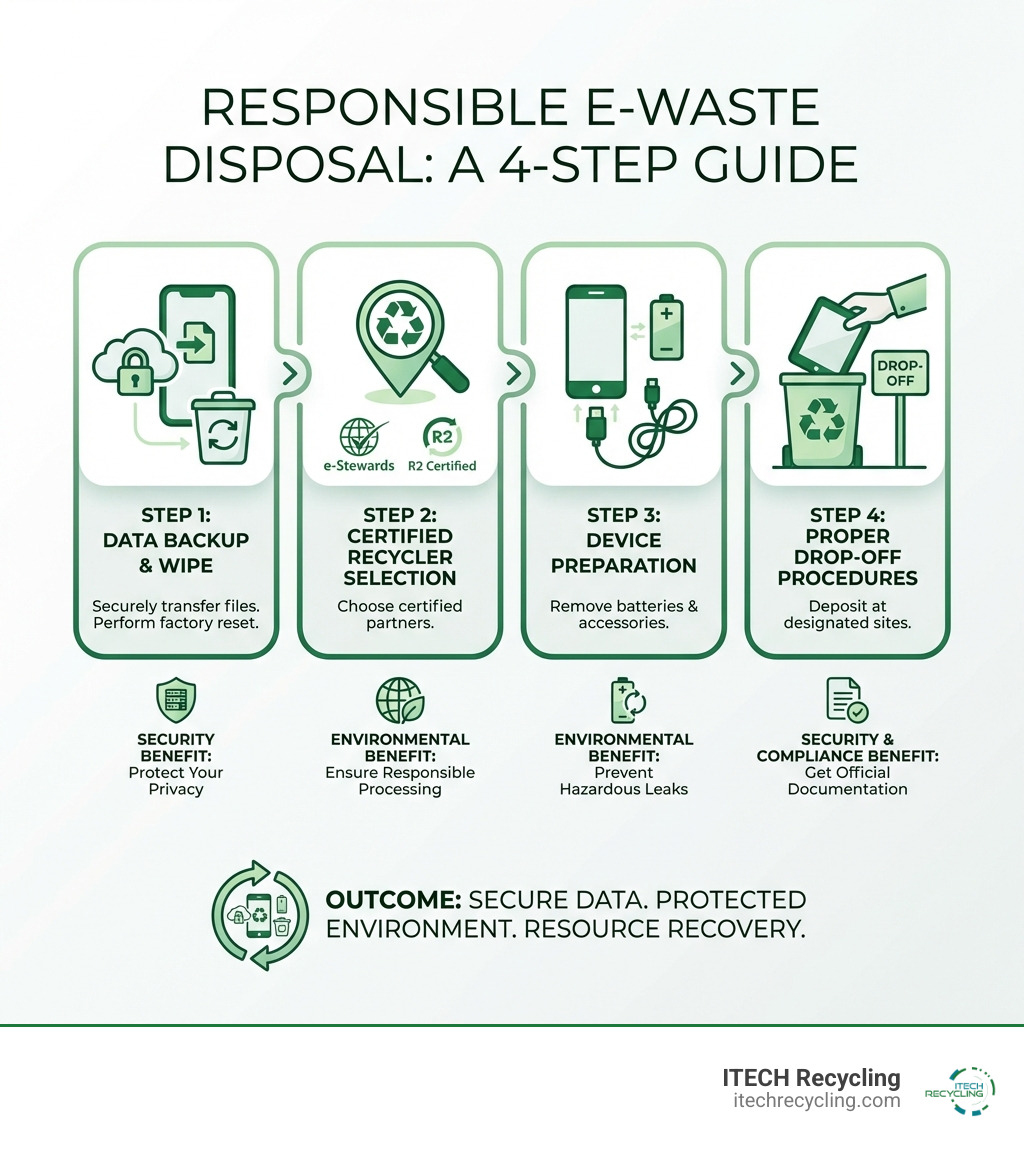
Responsible e-waste disposal protects your data, prevents environmental harm, and recovers valuable materials from old electronics. Here’s what you need to know:
Key Steps for Sustainable E-Waste Recycling:
- Back up and wipe your data using factory resets or professional data destruction
- Find a certified recycler with e-Stewards or R2 certification
- Remove batteries and accessories before drop-off
- Verify acceptance policies for your specific devices
- Get documentation of proper disposal for compliance records
Old phones, laptops, and tablets contain toxic materials like lead and mercury. When these devices end up in landfills, those toxins leak into soil and water.
But there’s also value locked inside. A single smartphone contains gold, silver, copper, and rare earth elements worth recovering.
The challenge? Most people don’t know where to start. Many drop old devices in desk drawers. Others toss them in the trash, risking data breaches and environmental damage.
This guide walks you through the complete process of disposing electronics the right way.
Why Responsible E-Waste Disposal Matters
When we talk about responsible e-waste disposal, we aren’t just talking about being “green” for the sake of it. We are talking about a critical intervention in a global waste crisis. Electronics are the fastest-growing waste stream on the planet. If we don’t manage them correctly, the consequences are both messy and expensive.
Environmental and Health Risks
The “guts” of your computer are a chemistry set you really don’t want in your backyard. Devices contain hazardous substances like cadmium, arsenic, and lead. If these sit in a landfill in Chicago or Springfield, they eventually break down. Rainwater then carries these toxins into the soil and groundwater—a process known as leaching.
Mercury is particularly nasty. Scientific research on mercury in e-waste shows that even small amounts can contaminate vast areas of water, affecting fish and, eventually, us. By choosing responsible e-waste disposal, we ensure these elements are captured in controlled environments rather than ending up in our local ecosystem.
Economic Benefits and Resource Recovery
On the flip side, your old “junk” is a literal gold mine. Electronics are packed with precious metals. Recovering these materials is far more efficient than mining them from the earth. For example, recycling one million laptops saves enough energy to power more than 3,600 homes for a year.
We often talk about the “circular economy.” This is the idea that products should be designed and managed so that their materials never become waste. You can learn more about this in our guide on What is E-Waste Recycling and How is it Done?. When we recover copper, gold, and plastic from old tech, we reduce the need for destructive mining and lower the carbon footprint of new products.
| Resource | Energy Savings from Recycling vs. Virgin Mining |
|---|---|
| Aluminum | 95% |
| Copper | 85% |
| Plastic | 80% |
| Steel | 60% |
Step-by-Step Guide to Preparing Your Devices
You’ve decided to be a pro at responsible e-waste disposal. Great! But before you drop that box of cables and tablets at a facility, you have some homework to do. You wouldn’t hand a stranger your physical filing cabinet without cleaning it out first, right? The same applies to your digital life.
Securing Your Data Before Responsible E-Waste Disposal
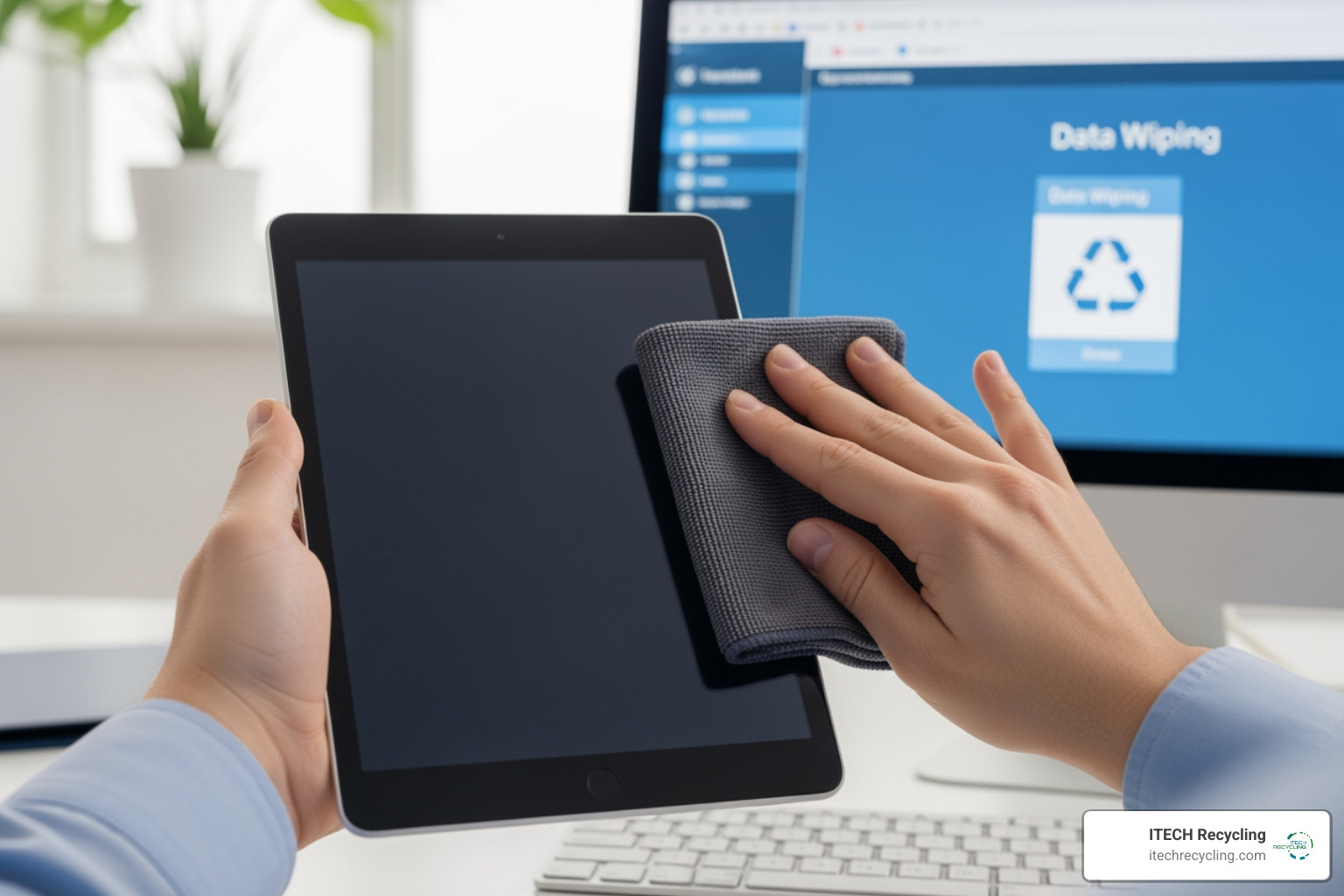
Data security is the biggest hurdle for most people. It’s why so many of us have a “drawer of shame” filled with five-year-old iPhones. Research has shown that up to 35% of hard drives sold on the secondary market still contain personal data.
To handle this like a pro, start by backing up anything you want to keep to the cloud or an external drive. Then, perform a factory reset. For businesses, a simple reset isn’t enough; you need verified data destruction. At iTech, we follow NAID AAA standards to ensure data is physically destroyed or wiped beyond recovery. If you’re wondering about the specifics, check out our article on Laptop Recycling in Wood Dale, IL: What Happens to Your Data?.
Identifying Acceptable vs. Non-Acceptable Items
Not all e-waste is created equal. Most recyclers are happy to take “anything with a cord,” but there are exceptions.
- Acceptable: Laptops, smartphones, servers, monitors (LED/LCD), and printers. Our Electronics and Computers Recycling service covers the bulk of what you’ll find in an office or home.
- Often Restricted: Old CRT (tube) TVs often require a fee because they contain several pounds of lead.
- Non-Acceptable: Most electronics recyclers cannot take smoke detectors (which can contain radioactive material) or large appliances like refrigerators.
For a detailed breakdown of what you can bring us, see the Complete Checklist for Electronics Disposal in Skokie, IL: What Devices Can You Recycle?.
Navigating Certifications and Standards
How do you know if a recycler is actually practicing responsible e-waste disposal or just shipping your old monitors to a scrap heap overseas? You look for the “seals of approval.” In our industry, certifications are the difference between a legitimate operation and a “fly-by-night” junk hauler.
Understanding the Regulatory Landscape for Responsible E-Waste Disposal
The laws surrounding e-waste are evolving quickly. Many regions are moving toward Individual Producer Responsibility (IPR), where manufacturers are held accountable for the end-of-life of their products. For example, the Waste Diversion Transition Act, 2016 highlights how governments are tightening the belt on waste management.
In the U.S., the EPA encourages using certified electronics recyclers to ensure performance and accountability. You can often find an Inventory of certified recycling programs or local state registries to verify who is authorized to handle your tech. Since 2009, certified programs have helped recycle over 150 million devices, keeping them out of the trash.
The Role of e-Stewards and R2 Certifications
There are two “gold standards” you should look for:
- R2 (Responsible Recycling): This standard focuses on the electronics supply chain, ensuring that materials are handled safely and legally all the way to their final destination. You can learn more at the Responsible Recycling (R2) Standard website.
- e-Stewards: This is often considered the most rigorous standard, with a heavy emphasis on preventing the export of hazardous waste to developing countries. Check the e-Stewards Standard for Ethical Recycling for more details.
Choosing a recycler with these certifications means you are guaranteed third-party audits, worker safety protections, and a “no-landfill” policy for hazardous components.
Frequently Asked Questions about Electronics Recycling
Is it illegal to throw out electronics in the trash?
In many places, including Illinois, it is indeed illegal to toss certain electronics like computers, monitors, and televisions into the regular garbage. These bans are in place to prevent heavy metals from entering the municipal waste stream. Always check your local ordinances, but as a rule of thumb: if it has a circuit board, it doesn’t belong in the bin.
Does it cost money to recycle e-waste?
It depends on the item. Most “data-rich” items like laptops and cell phones have enough residual value in their parts and metals that they can be recycled for free or even for a small rebate in large quantities. However, items that are difficult and hazardous to process—like old CRT monitors or alkaline batteries—often come with a small processing fee to ensure they are handled safely.
What happens to my data after I drop off my device?
If you use a certified recycler like iTech, your data is either wiped using software that meets Department of Defense standards or the drive is physically shredded. We provide a Certificate of Destruction upon request, which is your legal proof that the data no longer exists. This is a vital step for any responsible e-waste disposal plan.
Conclusion
Handling responsible e-waste disposal like a pro doesn’t have to be overwhelming. By taking a few minutes to secure your data, checking for certifications, and choosing a local expert, you turn a potential environmental hazard into a win for the planet.
At ITECH Recycling, we are proud to serve the Chicago area and surrounding communities—from Naperville and Aurora to Evanston and Elgin. We specialize in making the transition to sustainable tech management easy, secure, and fully compliant. Whether you’re an individual with one laptop or a business in Bolingbrook with a warehouse full of servers, we’re here to help. For a deeper look at why this matters for our community, read Electronics Recycling in Chicago, IL: Why It Is Important. Let’s work together to keep our local environment clean and our data safe.
 Prev
Prev