

Where to Give Back with Computer Parts Donation
Why Computer Parts Donation Matters for People and the Planet
Computer parts donation is a powerful way to give outdated technology a second life while protecting the environment and supporting underserved communities. Whether you have old laptops, RAM modules, hard drives, or entire desktop systems, donating these components keeps toxic materials out of landfills and provides essential digital access to those who need it most.
Quick Answer: Where to Donate Computer Parts
- Nonprofit Refurbishers – Many charitable organizations accept functional equipment for redistribution to schools and low-income families
- Educational Programs – Schools and training centers use donated parts for STEM learning and vocational programs
- Local Drop-Off Centers – Use tools like Earth911’s locator to find certified recyclers near you
- Corporate Donation Programs – Specialized platforms connect businesses with eligible nonprofits to streamline the donation process
- Manufacturer Take-Back Programs – Many brands offer mail-in or drop-off recycling services
Computer parts donation addresses three critical needs simultaneously. First, it conserves natural resources by recovering valuable metals like gold, copper, and palladium instead of mining new materials. Second, it bridges the digital divide by providing refurbished technology to people with disabilities, low-income families, and students in developing countries. Third, it prevents environmental harm by diverting hazardous electronic waste from landfills where lead, mercury, and other toxins can contaminate soil and water.
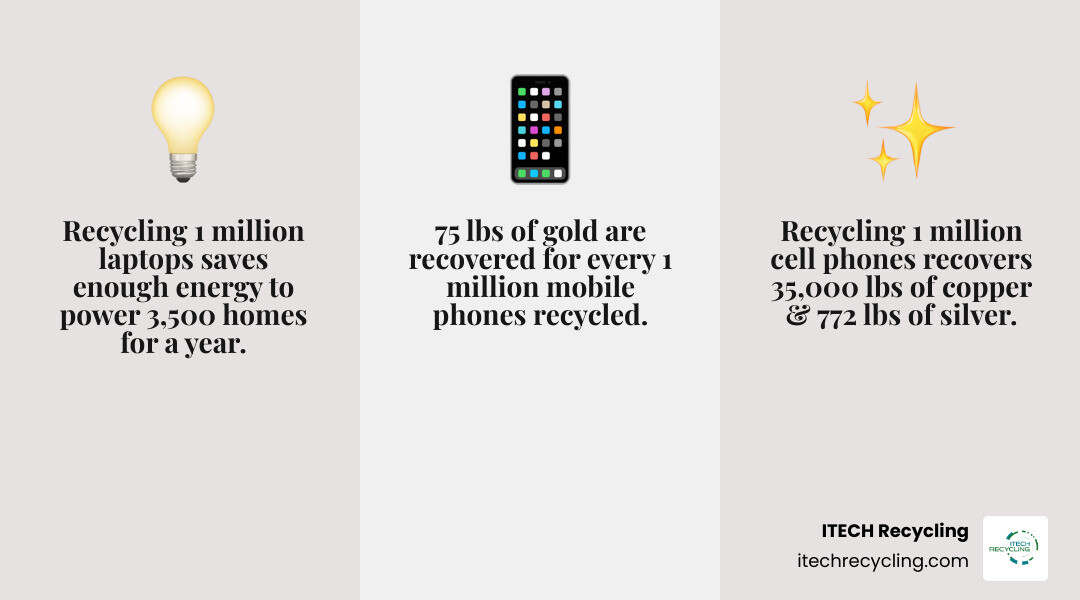
The impact is measurable. Recycling one million laptops saves enough energy to power 3,500 homes for a year. Recycling one million cell phones recovers 35,000 pounds of copper, 772 pounds of silver, and 75 pounds of gold. When you donate instead of discard, you multiply these benefits while empowering communities through technology access.
Proper donation requires attention to data security. Before any computer parts leave your possession, sensitive information must be completely erased using certified methods that meet NIST or DoD standards. Certified refurbishers and recyclers provide this service, often issuing certificates of data destruction for your records.
I’m Felix Bagr, owner of iTech Recycling, where we’ve helped thousands of organizations implement secure and sustainable computer parts donation programs that maximize material recovery while protecting sensitive data. Through years of managing electronics recycling operations, I’ve seen how responsible computer parts donation creates measurable environmental and social impact.
The Environmental and Social Impact of computer parts donation
When we talk about computer parts donation, we aren’t just talking about cleaning out a closet or an office storage room. We are talking about a fundamental shift in how we handle the lifecycle of technology. In the Chicago area, from the busy streets of downtown to suburbs like Naperville and Elgin, the way we dispose of our “old” tech has a ripple effect that spans the globe.
Every time a functional motherboard or a stick of RAM is donated rather than dumped, we are actively participating in resource recovery. Electronics are essentially “urban mines.” They contain precious materials that are incredibly energy-intensive to extract from the earth but relatively easy to recover from a circuit board. For example, for every million mobile phones recycled, we can recover 35,000 pounds of copper and 75 pounds of gold. By choosing computer parts donation, you ensure these materials stay in the production loop.
Furthermore, the energy savings are staggering. It is estimated that recycling one million laptops saves enough energy to power more than 3,500 U.S. homes for an entire year. This is because manufacturing new components from virgin raw materials requires significantly more electricity than refurbishing an existing part. To understand the full scope of this process, you can explore What is E-Waste Recycling and How is it Done?
Bridging the Digital Divide Through computer parts donation
The “digital divide” isn’t just a buzzword; it’s a barrier to education, employment, and healthcare. Thousands of people in our local communities—including students in Aurora and seniors in Evanston—lack access to reliable computing power.
By participating in computer parts donation, you provide the “building blocks” for refurbished machines. Many nonprofits specialize in taking donated parts, such as i-Series processors and SSDs, and assembling them into high-quality machines for:
- Students in need: Ensuring they can complete homework and gain digital literacy skills.
- Individuals with disabilities: Providing specialized hardware that facilitates communication and work.
- Nonprofits: Helping organizations in the Chicago area redirect their limited funds away from IT costs and toward their core missions.
Global nonprofit programs have connected millions of youth to digital resources through these types of donations. This isn’t just about the hardware; it’s about the skills training and opportunity that follow.
Environmental Benefits of Material Recovery
Even if a computer part is no longer functional, it shouldn’t end up in a landfill. Electronics contain toxic substances like lead, mercury, and cadmium. When left in a landfill, these can leach into the groundwater. However, when sent to a professional facility, these parts undergo a meticulous extraction process.
CPU recycling, in particular, is a fascinating part of this ecosystem. These tiny chips contain a concentration of precious metals far higher than what you’d find in raw ore. You can learn more about this in our A Complete Guide to CPU Recycling. By recovering gold, silver, and palladium from donated parts, we reduce the need for destructive mining practices worldwide. According to the USGS, recycled electronics are a treasure trove of valuable metals, and the more we donate, the more we protect our natural landscapes.

Essential Components: What Types of Computer Parts Can You Donate?
Not every piece of hardware is destined for the same path. Some items are perfect for refurbishment, while others are better suited for material recovery. Here is a breakdown of what is commonly accepted in a computer parts donation:
| Component Type | Best For… | Requirements |
|---|---|---|
| Laptops | Refurbishment | Generally i-Series or newer; include chargers if possible. |
| RAM Modules | Reuse | DDR3 or DDR4 are highly sought after; minimum 2GB. |
| Hard Drives (HDD/SSD) | Reuse or Recycling | Must be wiped; SSDs are preferred for modern speed. |
| Graphics Cards (GPU) | Refurbishment | Functional cards are vital for STEM/Design programs. |
| Power Supplies | Reuse | Must be tested for safety and efficiency. |
| Peripherals | Community Use | USB keyboards, mice, and webcams are always in demand. |
| Networking Gear | Nonprofit Infrastructure | Switches, routers, and mounting brackets. |
If you are in Mundelein or Arlington Heights and have a stack of old motherboards or power supplies, don’t assume they are trash. Even “scrap” components contain valuable copper and aluminum that can be harvested.
Step-by-Step Process for a Successful Donation
Donating electronics isn’t quite as simple as dropping a bag of clothes at a bin. Because computers hold our personal lives—and businesses hold sensitive client data—the process requires a few extra steps to be both safe and effective.
- Test the Equipment: If you’re donating for reuse, check if the part still works. If it’s dead, it’s a recycling candidate.
- Clean the Components: A quick blast of compressed air to remove dust goes a long way in helping a refurbisher.
- Wipe Your Data: This is the most critical step. Simple “deleting” isn’t enough. Use a secure data-wiping utility that overwrites the drive multiple times.
- Remove Personal Accounts: For laptops or tablets, ensure you have logged out of iCloud, Google, or Microsoft accounts and disabled “Find My Device.”
- Remove Batteries: If a battery is swollen or leaking, it must be handled as hazardous waste. For standard donations, keep the battery with the device if it’s in good condition.
For those in Schaumburg or surrounding areas, understanding how responsible computer recycling prevents data breaches is essential for peace of mind.
Data Security Best Practices for computer parts donation
We cannot stress this enough: Data security is the #1 priority. Whether you are an individual in Bolingbrook or a large corporation in Chicago, your hard drives contain “digital DNA.”
Professional organizations like ours use NAID AAA certified processes to ensure data destruction. This includes:
- Software Sanitization: Using DoD 5220.22-M or NIST 800-88 standards to wipe drives.
- Physical Destruction: For drives that are obsolete or failing, physical shredding or “punching” ensures the data can never be recovered.
- Certificates of Destruction: Always ask for a certificate. This is your legal proof that the data has been handled according to federal regulations like HIPAA or FACTA.
Requirements for Age and Condition
While we love the spirit of giving, some tech is simply too old to be useful for modern tasks. Most donation programs prefer laptops that are i-Series (i3, i5, i7) or newer.
If your computer still has a floppy disk drive or is running Windows XP, it’s likely a candidate for recycling rather than refurbishment. These older units are still valuable for their raw materials but may not be able to run the software required for today’s students or nonprofits.
Where to Donate Computer Parts: Top Organizations and Programs
If you are looking for a place to drop off your computer parts donation in the Chicago area, you have several excellent options.
- Nonprofit Refurbishers: Many charitable organizations focus on getting tech into the hands of those who need it. They often have specific requirements, so check their websites first.
- Community Centers: Local libraries or vocational schools in cities like Springfield or Bloomington often accept parts for their tech labs.
- The Earth911 Locator: This is an incredible tool. You can visit the Earth911 Locator to find a certified recycling or donation center specifically in your zip code.
- Microsoft Authorized Refurbishers: These organizations are vetted by Microsoft to ensure they use genuine software and follow high standards for refurbishment.
- ITECH Recycling: We provide a seamless bridge for both residential and business donors across the Chicago area, ensuring your parts are either refurbished for a second life or recycled with zero-waste-to-landfill goals.
Business Benefits of Donating Corporate IT Assets
For businesses in Elk Grove Village or Wood Dale, computer parts donation is more than just “doing good”—it’s a smart business move. When a company upgrades its fleet of workstations, those old units are valuable assets.
- Tax Deductions: Under IRS section 170, businesses can often claim a tax deduction for the fair market value of donated equipment to a 501(c)3 nonprofit.
- CSR and Brand Reputation: Consumers today want to support “green” companies. Reporting on the number of laptops diverted from landfills is a great addition to any annual sustainability report.
- Decluttering and Compliance: Holding onto old tech in a storage room is a security risk. Donating it to a certified provider ensures it is tracked, wiped, and disposed of according to EPA and HIPAA standards.
- LEED Credits: For property managers in Chicago, implementing an e-waste program can help earn LEED points for your building.
What Happens to Your Donated Tech?
Have you ever wondered what happens after you drop off your box of cables and components? The journey is quite detailed:
- Sorting and Auditing: Every item is logged. We determine if a part is “fit for reuse” or “fit for recovery.”
- Data Destruction: Every storage device goes through the sanitization process mentioned earlier.
- Refurbishment: Technicians replace broken screens, upgrade RAM, and install fresh operating systems. This is where your computer parts donation truly shines, as parts from three broken laptops might be harvested to create one perfect, working machine.
- Component Harvesting: If a machine can’t be saved, we “harvest” the good parts—like the CPU, CMOS batteries, or heat sinks—to repair other units.
- Raw Material Recovery: Finally, the remaining “scrap” is processed. Plastic is shredded, and circuit boards are sent to specialized smelters to recover gold, copper, and silver.
Our goal is always Zero Waste to Landfill. We want to ensure that 95% or more of the e-waste we receive is diverted back into the economy in some form.
Frequently Asked Questions about Computer Parts Donation
Can I donate computer parts that are broken?
Yes! While broken parts might not go directly into a student’s hands, they are incredibly valuable for “component harvesting.” A broken laptop might still have a perfectly functional keyboard or RAM module. If the part is completely beyond repair, it will be responsibly recycled to recover its raw materials.
Is my donation tax-deductible?
In many cases, yes. If you donate to a registered 501(c)3 nonprofit, you can typically claim a deduction. You will need to determine the “fair market value” of the items and keep a receipt from the organization. We always recommend consulting with a tax professional, especially for large corporate donations.
How do I ensure my data is completely gone?
The best way is to use a professional service. While there are free “disk-wiping” tools available online, they don’t always handle hidden partitions or remapped sectors. At ITECH Recycling, we use industrial-grade software and physical destruction methods to ensure your identity and data are 100% protected.
Conclusion
Participating in computer parts donation is one of the easiest ways to make a tangible difference in the world. By keeping your tech out of the trash, you are saving energy, recovering precious metals, and providing a lifeline to someone who needs a computer to learn, work, or connect with their family.
Whether you are a resident in Glenview or a business owner in Arlington Heights, we invite you to join us in this mission. Let’s turn that “e-waste” into “e-opportunity.”
Ready to clear out your old tech? Start your responsible computer parts donation today with ITECH Recycling and help us build a more sustainable, digitally inclusive Chicago.
 Prev
Prev