

Certified Electronics Recycling Centers and Why They Matter
Why a Certified Electronics Recycling Center Is the Only Safe Choice for Your Old Devices
A certified electronics recycling center is a facility that has been independently audited and approved to handle e-waste safely, securely, and responsibly — protecting both your data and the environment.
How to find one quickly:
| Method | Resource |
|---|---|
| Search R2-certified recyclers | R2 Certified Directory |
| Search e-Stewards certified recyclers | e-Stewards Locator |
| Canada residents | Recycle My Electronics / EPRA |
| US households | GreenerGadgets or Call2Recycle programs |
| Enterprise & business pickups | Contact a certified ITAD provider directly |
Every year, millions of old computers, phones, and servers are thrown away or handed off to unqualified recyclers. The results can be serious: toxic materials like lead and mercury leak into the environment, and sensitive data on discarded hard drives ends up in the wrong hands.
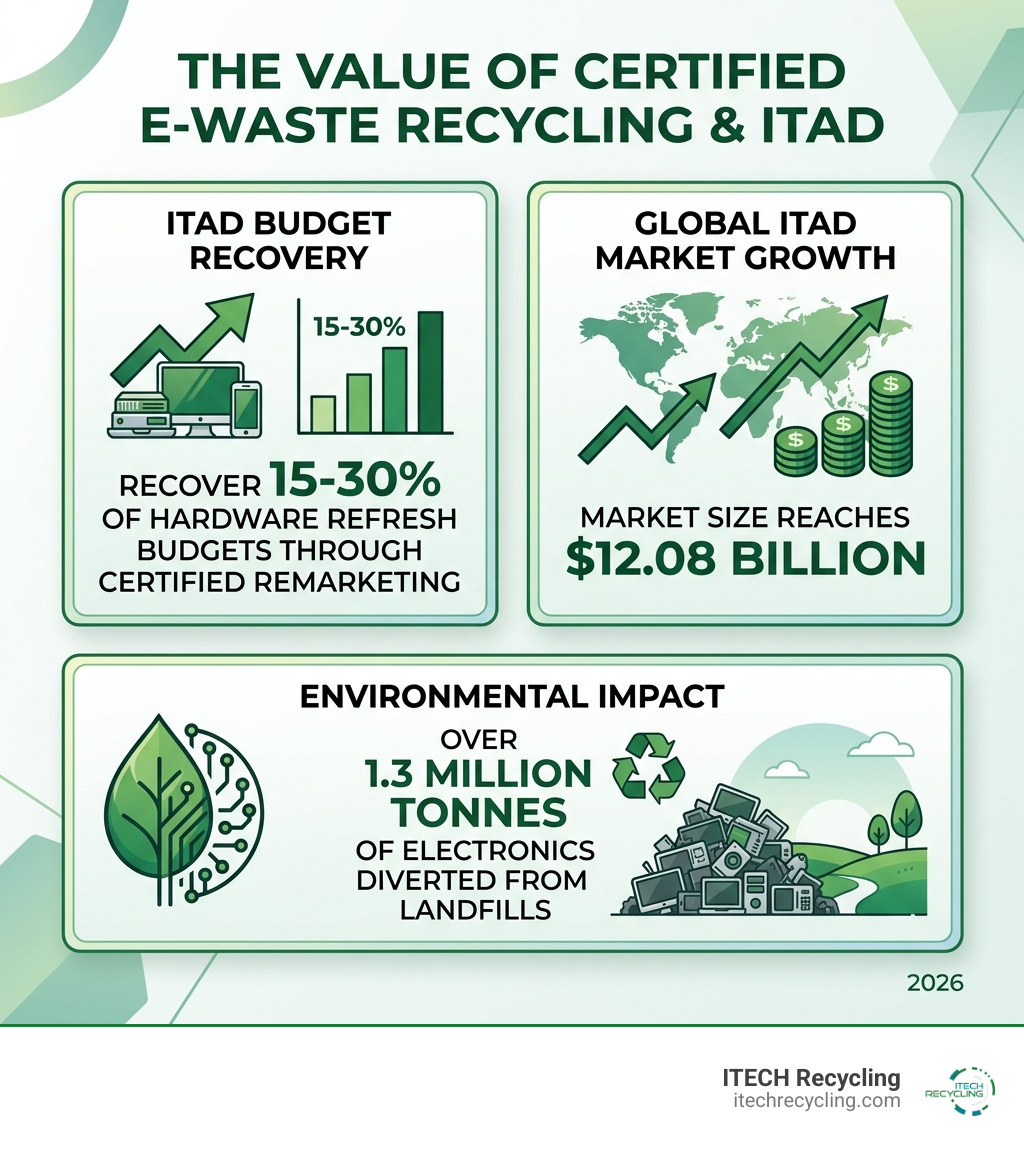
The scale of the problem is growing fast. The global IT asset disposition (ITAD) market hit $12.08 billion in 2026 and is expanding at nearly 14% per year. Meanwhile, the average cost of a data breach has reached $4.44 million — and improper hardware disposal is one of the key vulnerabilities.
Certification changes everything. It means a recycler has been vetted by an independent third party to meet strict standards for data destruction, environmental handling, and downstream accountability. Without it, you have no way to verify what actually happens to your devices.
ITECH Recycling is a hands-on practitioner in certified electronics recycling and IT asset disposition for businesses and organizations of all sizes. Our work at a certified electronics recycling center has given us a ground-level understanding of what responsible, compliant e-waste management looks like in practice — and what’s at stake when it falls short.
In this guide, we’ll walk you through everything you need to know to find, evaluate, and work with the right certified recycler for your needs.
What Defines a Certified Electronics Recycling Center?
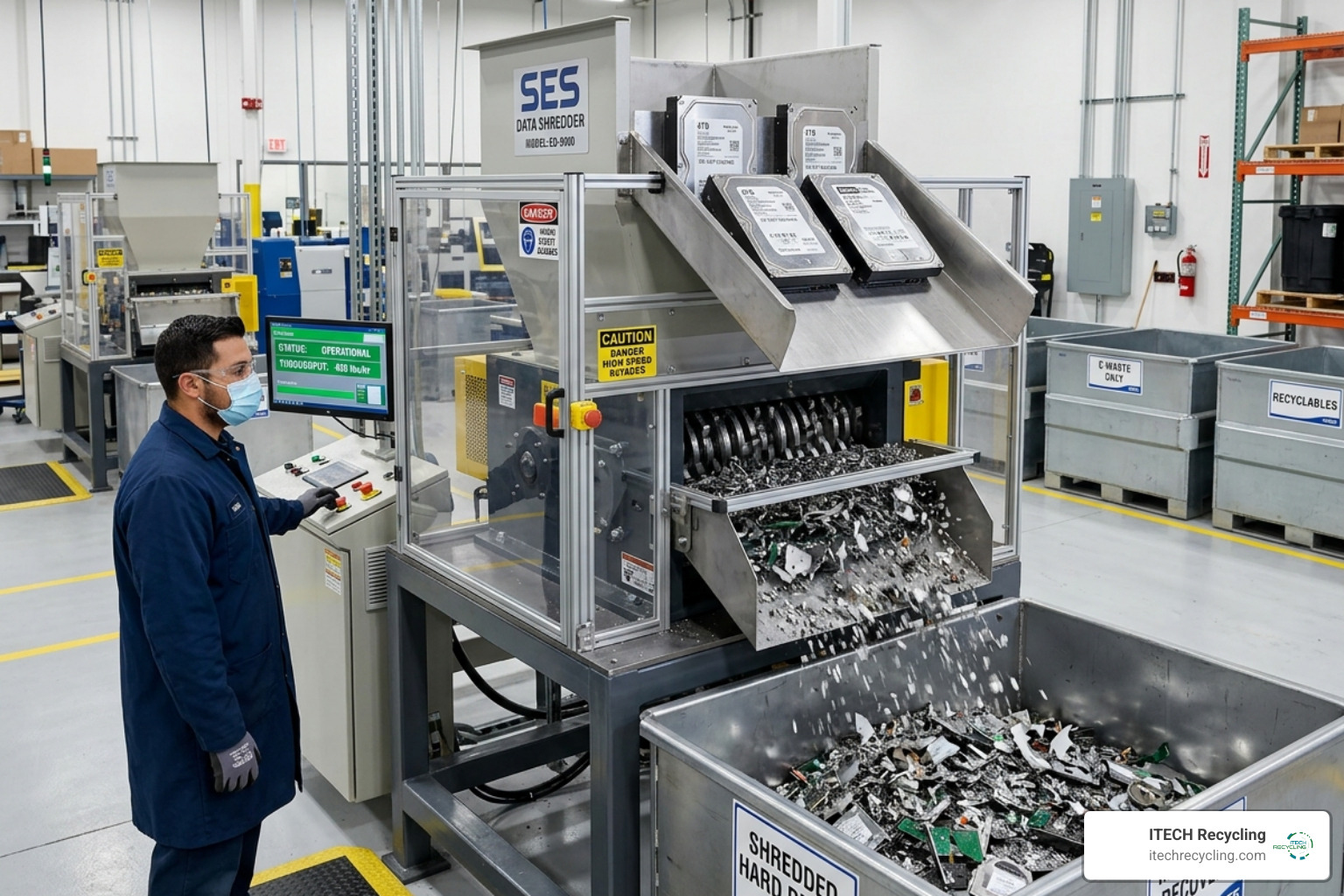
When we talk about a Certified electronics recycling center, we aren’t just talking about a warehouse that collects old monitors. A certified facility is one that has undergone rigorous, third-party audits to prove they follow specific global standards. In April 2026, these certifications are more than just badges; they are the legal and ethical backbone of the ITAD industry.
Certifications like R2v3 and e-Stewards ensure operational transparency. This means the recycler must account for every single device that enters their facility. They can’t simply ship “junk” to developing nations or toss it in a local landfill. Instead, they must demonstrate “downstream accountability,” tracking materials until they are either fully refurbished or reduced back to raw commodities by specialized smelters.
For us at ITECH Recycling, maintaining these standards is about protecting environmental health and ensuring safety for both our workers and the communities we serve. You can learn more about how these standards differ in our guide on r2 and e-stewards-navigating-the-world-of-certified-electronics-recycling/.
The Importance of Choosing a Certified Electronics Recycling Center
Why can’t you just give your old office laptops to a local “free” scrapper? The risks are simply too high. Choosing a certified center is about risk mitigation. If your company’s data is found on a hard drive in a landfill, the “I gave it to a guy with a truck” excuse won’t protect you from massive fines or a PR nightmare.
The EPA strongly recommends using certified recyclers because they are the only ones equipped to handle hazardous materials like lead, mercury, and cadmium properly. Furthermore, using a Certified electronics recycling center ensures brand protection. For businesses in Chicago or Springfield, showing that you use a certified partner demonstrates a commitment to sustainability that resonates with modern consumers.
Global Standards: R2v3 vs. e-Stewards
There are two primary “gold standards” in the industry. While they share many goals, they have slightly different focuses.
| Feature | R2v3 (Responsible Recycling) | e-Stewards |
|---|---|---|
| Primary Focus | Market-based, focuses on reuse and material recovery. | Strict environmental justice and ethical export bans. |
| Data Security | High (Requires NIST-compliant sanitization). | Very High (Often paired with NAID AAA). |
| Export Policy | Allowed to certified downstream partners. | Extremely restricted to prevent e-waste dumping. |
| Audit Frequency | Annual third-party audits. | Annual third-party audits. |
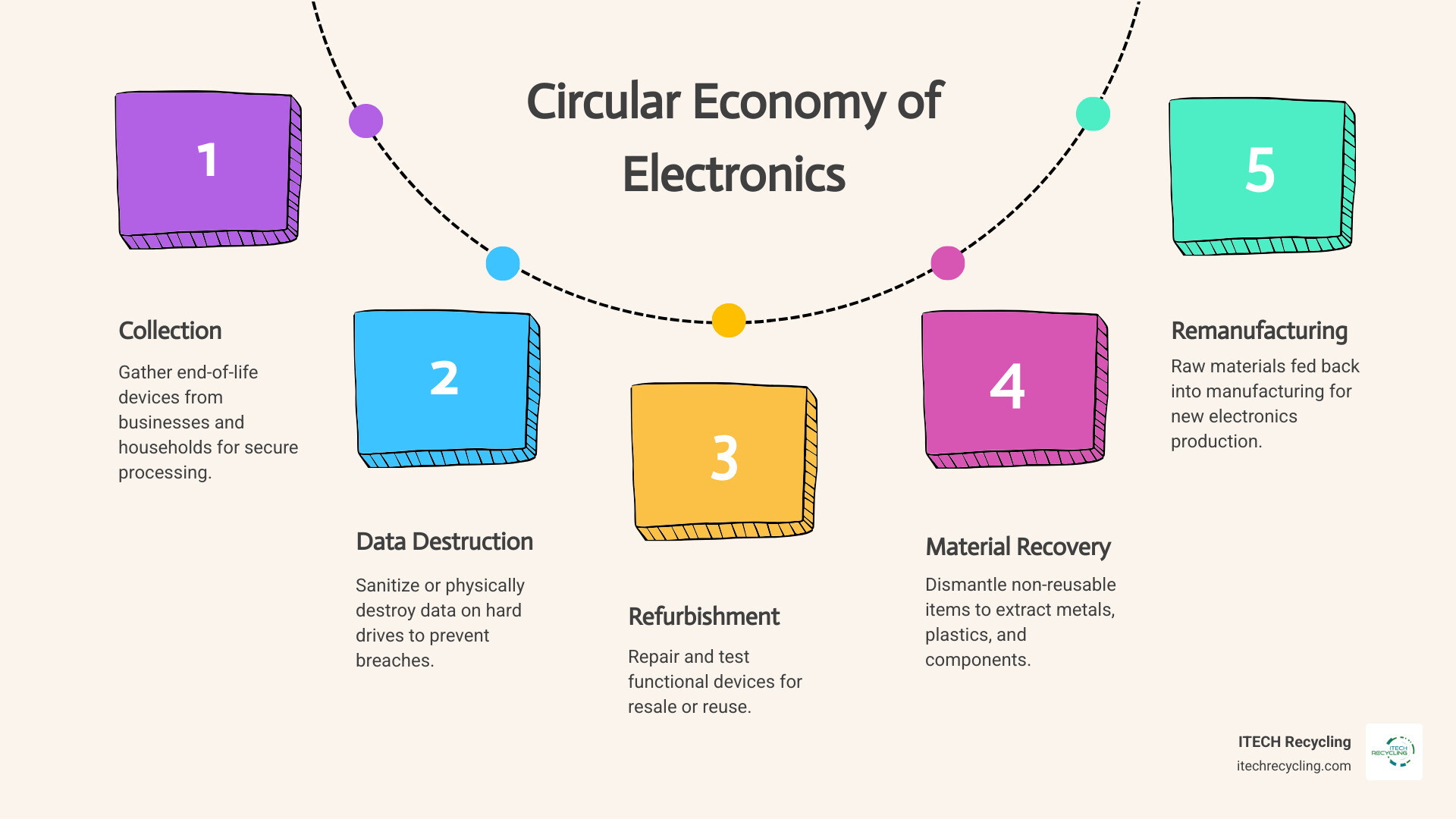
Both standards require recyclers to prioritize “reuse” over “shredding,” which is a key part of the circular economy. By refurbishing a laptop, we extend its life and reduce the need for mining new rare earth metals.
Data Security and Regulatory Compliance
In 2026, your hardware is essentially a physical container for your most sensitive digital assets. When a device reaches its end-of-life, the data doesn’t just disappear. Improper hardware retirement is now cited as a critical vulnerability in corporate security. With the average data breach cost hitting $4.44 million, the “recycling” part of the job is often secondary to the “data destruction” part.
Data Security at a Certified Electronics Recycling Center
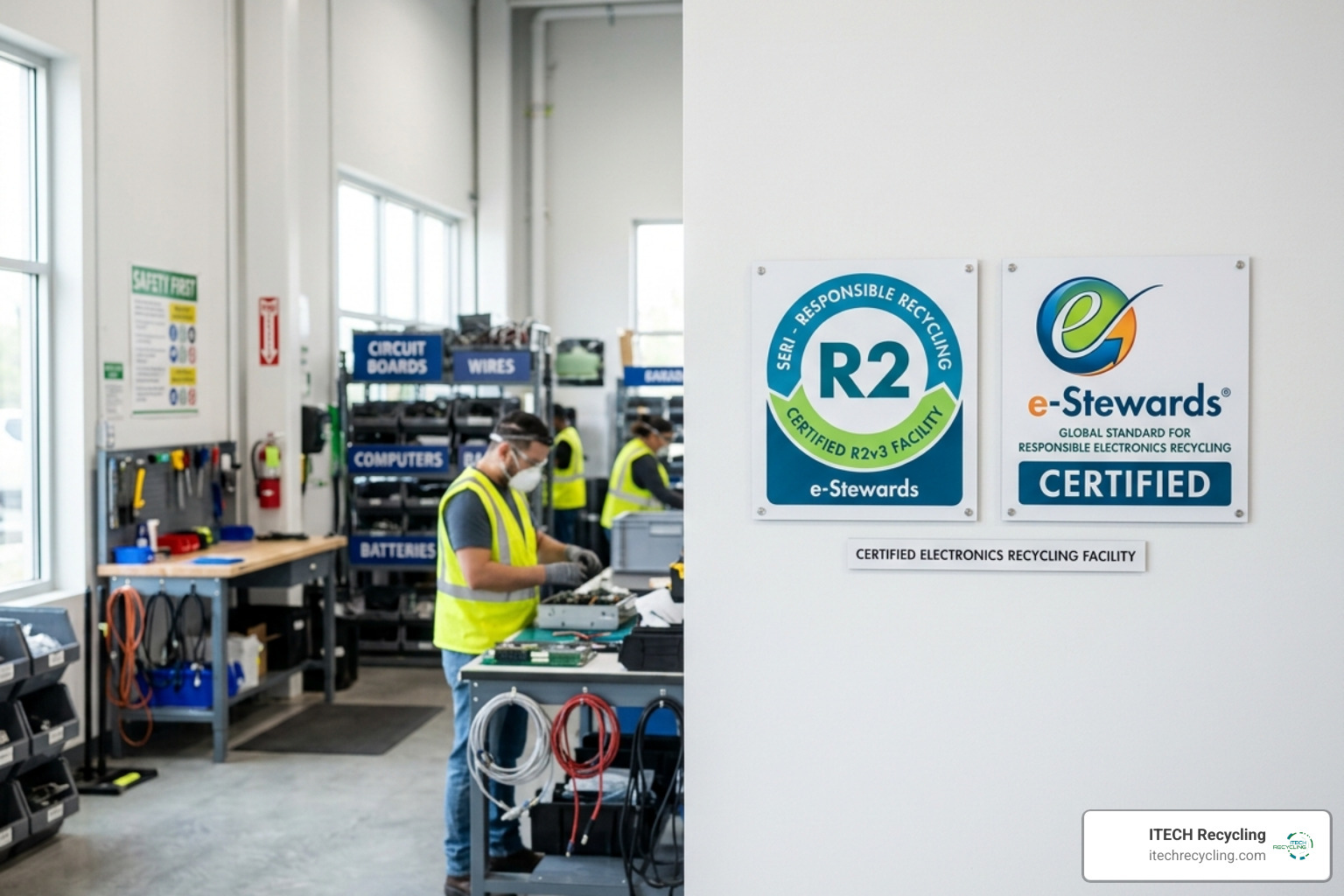
A Certified electronics recycling center uses industrial-grade methods to ensure data is unrecoverable. This includes:
- Software Sanitization: Using NIST 800-88 compliant software to overwrite data multiple times.
- Physical Destruction: Industrial shredders that turn hard drives and SSDs into tiny metal confetti.
- Degaussing: Using high-intensity magnetic fields to neutralize data on magnetic media.
At ITECH Recycling, we believe you shouldn’t just take a recycler’s word for it. We provide Certificates of Destruction and serialized tracking, so you have a digital paper trail for every serial number processed. For a deeper dive into why these certifications matter, check out our article: Dont Let Your Data Come Back To Haunt You With Naid Certification/.
Compliance for Regulated Industries
For our clients in Chicago’s financial district or healthcare providers in Naperville and Evanston, compliance isn’t optional—it’s the law. Certified centers are built to meet the requirements of:
- HIPAA: Protecting Patient Health Information (PHI).
- SOX (Sarbanes-Oxley): Ensuring financial record integrity for public companies.
- FISMA/FERPA: Meeting government and educational data standards.
Using a certified recycler ensures you are “audit-ready.” If a regulator asks where your 2022 server racks went, you can produce a certified report showing they were destroyed according to NIST standards.
IT Asset Disposition (ITAD) and Value Recovery
Many people view e-waste as a cost, but for businesses, it can actually be a source of revenue. The global ITAD market has grown into a $12.08 billion industry because certified recyclers have mastered the art of “asset recovery.”
Accepted Equipment and Material Processing
A Certified electronics recycling center typically accepts a wide range of technology, including:
- Computing Power: Desktops, laptops, and tablets.
- Enterprise Gear: Servers, mainframes, and networking switches.
- Mobile Devices: Cell phones and specialized handhelds.
- Office Tech: Printers, copiers, and monitors.
- Infrastructure: UPS systems, circuit boards, and cabling.
By using a certified provider, organizations can often recover 15-30% of their hardware refresh budgets through the remarketing of refurbished equipment. This helps offset the cost of new technology while keeping perfectly good machines out of the shredder.
Environmental Impact of Professional Recycling
The environmental stakes are massive. In Canada alone, over 1.3 million tonnes of electronics have been diverted from landfills through programs like EPRA. In the US, certified recyclers like us help prevent tons of toxic materials from entering the soil.
When you recycle a single laptop, you aren’t just preventing lead and mercury from leaking; you are recovering precious materials like gold, copper, and rare earth metals. This reduces the need for destructive mining and lowers the overall carbon footprint of the tech industry. For Chicago residents, the Household Chemicals & Computer Recycling Facility – City of Chicago is a great resource for seeing how local government and certified partners work together.
Finding a Certified Electronics Recycling Center Near You
Whether you are a business in Elgin or a resident in Bolingbrook, finding a nearby certified facility is easier than it used to be. For businesses, we often provide on-site services, including mobile shredding and secure transportation, to ensure the chain-of-custody is never broken.
Evaluating Local Recycling Providers
When looking for a provider in the Chicago area, look for these “red flags” and “green flags”:
- Green Flag: They provide a Certificate of Destruction with serial numbers.
- Green Flag: They hold R2v3 or e-Stewards certifications (verify this on the official directory!).
- Red Flag: They offer “free” recycling for everything without explaining their downstream process.
- Red Flag: They refuse to allow a facility tour or provide compliance documentation.
Local resources like Electronics Recycling in Naperville and SWALCO Year-Round Locations provide excellent drop-off points for residents in the surrounding suburbs.
Regional Programs and Stewardship
In Illinois, the Electronic Products Recycling & Reuse Act requires manufacturers to participate in the management of end-of-life electronics. This has led to a robust network of collection sites. Similarly, across the border, the EPRA manages a national network of qualified processors to ensure materials stay within a managed, ethical loop.
Frequently Asked Questions about E-Waste
What is the difference between “recycling” and “certified recycling”?
Standard “recycling” might just mean someone is taking the scrap metal value and dumping the rest. Certified recycling involves third-party oversight, ensuring data is destroyed and hazardous materials are handled according to federal and international law.
Do certified centers charge fees for all items?
It depends. Many items like laptops and servers have resale value, which can lead to free pickups or even buybacks for businesses. However, items that are difficult to process—like older CRT televisions or certain printers—may require a small environmental fee to cover the cost of safe disposal.
How do I prepare my devices before drop-off?
While a Certified electronics recycling center will perform professional data destruction, we always recommend:
- Backing up your data.
- Signing out of cloud accounts (iCloud, Google, etc.).
- Removing SIM cards and external storage cards.
- Performing a factory reset if possible.
Conclusion
The choice to use a Certified electronics recycling center is a choice to protect your business, your community, and the planet. As the e-waste crisis grows, the importance of verified, transparent recycling cannot be overstated.
At ITECH Recycling, we are proud to serve the Chicago area—from Aurora and Arlington Heights to Mundelein and Deerfield—providing the highest level of security and sustainability. Whether you are looking to recover value from a hardware refresh or simply need to ensure your data is gone for good, we are here to help.
Ready to secure your data and recycle responsibly? Explore our Secure E-Waste Services today.
 Prev
Prev