

Why Your Old Tech Deserves a Better Afterlife
Why End-of-Life Electronics Recycling Matters More Than You Think
End-of-life electronics recycling is the process of collecting, sorting, and recovering materials from old or broken electronic devices — instead of sending them to a landfill where toxic substances can leak into soil and water.
Here’s what you need to know at a glance:
| What it covers | Why it matters |
|---|---|
| Smartphones, laptops, TVs, tablets, batteries | Contain hazardous materials like lead, mercury, and cadmium |
| Precious metals like gold, silver, copper | A ton of cell phones holds 100x more gold than a ton of gold ore |
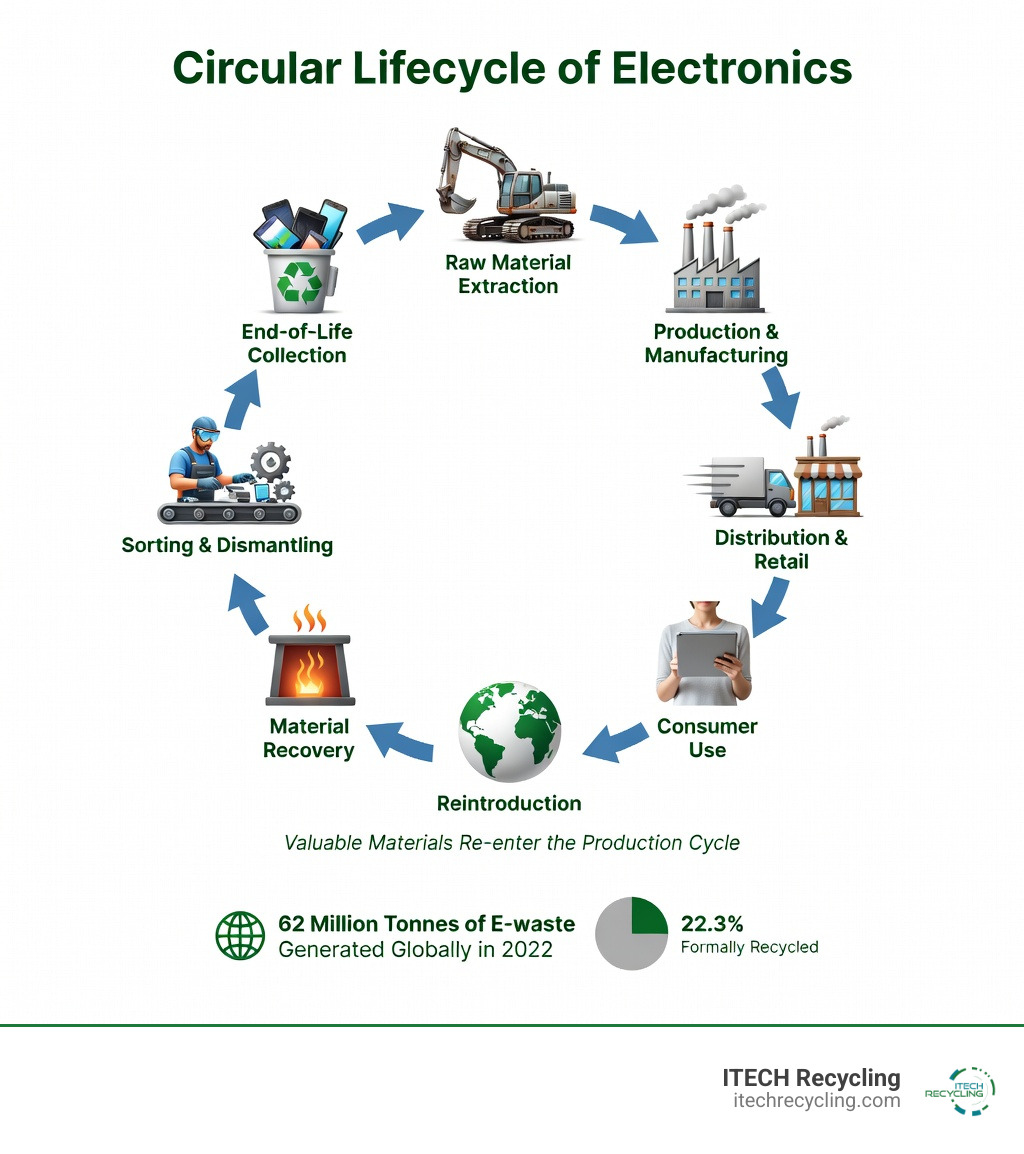
| Global scale | 62 million tonnes of e-waste generated in 2022 — only 22.3% formally recycled |
| Data security risk | Improperly discarded drives can expose sensitive personal or business data |
| Your options | Certified recyclers, manufacturer take-back programs, drop-off events |
Every outdated smartphone stuffed in a drawer, every broken laptop collecting dust in the closet — these aren’t just clutter. They’re a growing global problem. The world generated 62 million tonnes of e-waste in 2022, yet less than a quarter of it was formally recycled. The rest? Largely dumped, burned, or shipped to informal processing sites where toxic chemicals contaminate communities and ecosystems.
At the same time, those discarded devices are packed with valuable, recoverable resources — copper, gold, silver, and rare earth elements that take enormous energy and environmental cost to mine from scratch. Recycling them properly isn’t just the responsible choice. It’s the smarter one.
ITECH Recycling is a full-service electronics recycling and IT asset disposition company with hands-on experience in end-of-life electronics recycling for businesses and organizations of all sizes. In this guide, we’ll walk you through everything — from the hidden value in your old devices to how to dispose of them safely, securely, and sustainably.
The Global Crisis of End-of-Life Electronics Recycling
When we talk about e-waste, we aren’t just talking about a few old remote controls. We are facing a tidal wave of discarded technology. The world now generates over 50 million tonnes of electronic waste every single year. To put that in perspective, that is equivalent to throwing away 125,000 jumbo jets annually.
Despite the massive volume, our global response is lagging. Currently, the worldwide recycling rate for e-waste sits at a staggering 12.5%. This means that nearly 90% of our high-tech trash is ending up in places it shouldn’t be. According to the Global E-waste Monitor 2024, 62 million tonnes were produced in 2022 alone, with only 22.3% documented as formally collected and recycled.
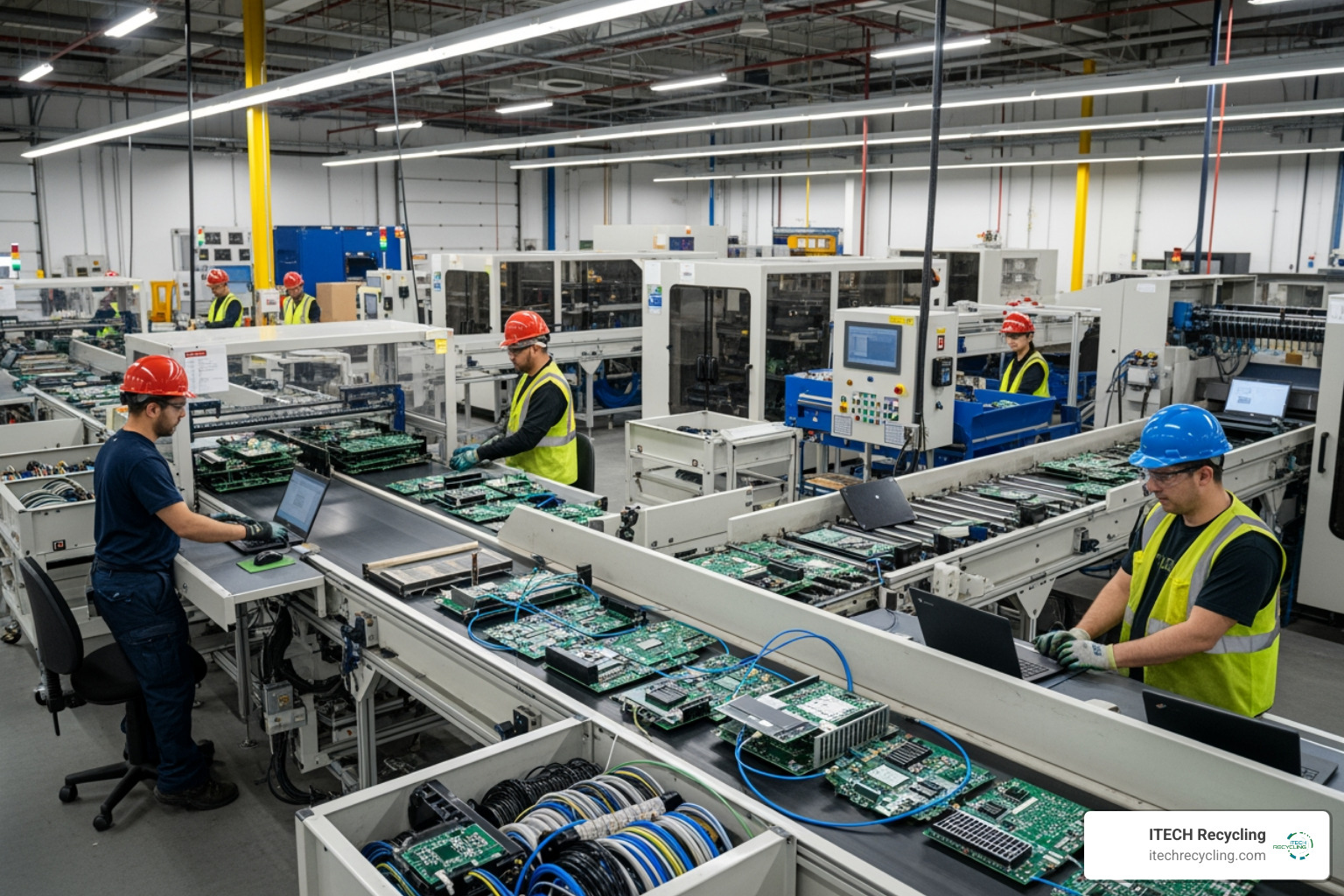
This crisis has given rise to the concept of “urban mining.” Instead of digging deep into the Earth’s crust for raw materials, we can find them in our desk drawers. Understanding What is E-Waste Recycling and How is it Done? is the first step toward turning this global problem into a sustainable solution.
The Growing Problem of Obsolete Tech
Why is the pile getting bigger? It’s a combination of shorter product lifecycles and the “electronification” of everything. From smart toasters to light-up sneakers, more products than ever contain circuits and batteries.
We often think recycling is the only answer, but repair is actually the gold standard for sustainability. In fact, keeping our phones for just one additional year on average would be the carbon equivalent of taking 636,000 cars off the road. By paying attention to repairability scores and choosing devices that can be fixed, we can significantly improve landfill diversion rates before a device ever reaches a recycler.
Challenges in Global E-Waste Management
The path from your trash can to a clean environment is full of obstacles. In many developing nations, an informal recycling sector handles the bulk of the waste. For example, 95% of India’s e-waste is processed by informal, often illegal, waste pickers. While these workers are incredibly efficient at collecting items, the “backyard” methods used to extract metals—like acid baths and open burning—pose extreme risks.
International agreements like the Basel Convention attempt to control this “transboundary movement,” preventing wealthy nations from dumping their toxic tech on countries with fewer regulations. However, illegal exports remain a persistent challenge that only certified, domestic recycling can truly solve.
Environmental and Health Impacts of Improper Disposal
When electronics are tossed in the regular trash, they don’t just sit there. They become “toxic time bombs.” Devices contain a cocktail of hazardous materials that are perfectly safe while the device is intact but become deadly when crushed or burned.
If a device ends up in a landfill, it can leach heavy metals like cobalt, copper, and nickel into the soil. This isn’t just a theory; it’s a documented disaster. In the Korle Lagoon near an illegal dump site in Ghana, copper was found at 66 times the safety threshold. This level of contamination is toxic to invertebrates and causes organ damage in fish, eventually working its way up the food chain to humans. For businesses, choosing the best IT asset disposal companies is the only way to ensure they aren’t contributing to this environmental degradation.
Toxic Substances and Vulnerable Populations
The “Big Three” of e-waste toxins—lead, mercury, and cadmium—are particularly nasty. Lead, found in older CRT monitors and solder, is a potent neurotoxicant. Mercury, used in backlighting for flat screens, can damage the brain and coordination systems.
The World Health Organization warns that children and pregnant women are the most vulnerable. Children living near informal recycling sites often have elevated heavy metals in their bodies, leading to reduced lung function, asthma, and neurodevelopmental issues. By recycling properly, we protect the most vulnerable members of the global community.
The Danger of Battery Fires
There is another, more immediate danger: fire. Lithium-ion batteries are the heart of our mobile world, but they are also highly volatile. If a charged battery is caught in a waste compactor or shredder, it can suffer “thermal runaway,” leading to explosive fires.
Waste facility battery fires are up 38% since 2017, and a staggering 90% of all fires at recycling facilities are now caused by lithium-ion batteries. This is why you should never, ever put a rechargeable battery in your curbside recycling bin.
The Economic Value Hidden in Your E-Waste
Here is the “fun” part: your old junk is actually a treasure chest. We often think of mining as something that happens in a giant hole in the ground, but “urban mining” is far more efficient.
Did you know there is 100 times as much gold in a ton of cell phones as there is in a ton of gold ore? When we throw a phone away, we are literally throwing money into the ground. Beyond gold, components like CPUs are rich in valuable materials. If you’re curious about the specifics, check out this Complete Guide to CPU Recycling.
Maximizing Resource Recovery in End-of-Life Electronics Recycling
The statistics for material recovery are eye-opening. For every one million cell phones we recycle, we can recover:
- 35,000 lbs of copper
- 772 lbs of silver
- 75 lbs of gold
- 33 lbs of palladium
By utilizing professional electronics and computers recycling services, we reduce the need for primary mining. This saves massive amounts of energy—recycling one million laptops saves enough electricity to power over 3,500 U.S. homes for a year!
How to Prepare Your Devices for a Responsible Afterlife
Before you drop off your tech at a collection point, you have a few responsibilities. Proper preparation ensures that your personal life stays private and that the recycling process is as safe as possible.
Your first priority is data security. Simply deleting files or formatting a drive isn’t enough; data can often be recovered from discarded drives by scammers. We recommend Hard Disk Recycling for People Who Love the Planet and Their Privacy to understand the nuances of data destruction. Additionally, following a guide on how to handle responsible e-waste disposal like a pro can save you from common mistakes, like forgetting to remove memory cards.
Steps for Secure End-of-Life Electronics Recycling
- Back up your data: Save your photos and documents to the cloud or an external drive.
- Factory Reset: For smartphones and tablets, perform a full factory reset.
- Data Overwriting: Use secure wiping software that overwrites your data multiple times.
- Physical Destruction: For high-security needs, we offer IT Asset Disposition in Chicago IL which includes physical hard drive punching or shredding.
- Remove Batteries: If the battery is removable, take it out and recycle it separately.
Navigating Regulations and Finding Certified Recyclers
The laws surrounding e-waste are a bit of a patchwork. In the United States, there is no federal mandate, but 25 states (including Illinois) have passed their own e-waste laws. Many of these involve Extended Producer Responsibility (EPR), which requires manufacturers to fund recycling programs for the products they sell.
Understanding the smart way to manage responsible IT asset disposal means knowing the difference between a “guy with a truck” and a certified facility. Even in states with strict laws, like New York and its NYS Electronic Equipment Recycling and Reuse Act, the key is finding a partner you can trust.
Identifying Responsible Recycling Partners
How do you know if a recycler is actually doing what they say? Look for third-party certifications. The two main standards are R2 (Responsible Recycling) and e-Stewards. These certifications require rigorous audits to ensure that the recycler:
- Protects worker health and safety.
- Does not export toxic waste to developing countries.
- Performs secure data destruction.
- Manages “downstream” partners responsibly.
For local businesses, sustainable IT asset management in Wheeling IL and surrounding areas depends on these certifications to ensure total compliance and peace of mind.
Frequently Asked Questions about E-Waste
What should I do if my battery is swollen?
A swollen battery is a serious fire hazard. It happens when gas builds up inside the cell due to age or damage. Do not throw it in the trash or a standard recycling bin. Handle it with extreme care, place it in a non-flammable container (like a metal bucket with sand), and take it to a specialized hazardous waste facility immediately.
Can I throw single-use batteries in the trash?
The US Environmental Protection Agency says that common alkaline and zinc-carbon batteries are generally safe for the trash in most states (except California). However, recycling is always the better choice to recover steel and zinc. Rechargeable batteries (Lithium-ion, Ni-MH) should never go in the trash.
How do I find a local recycling drop-off point?
There are several great tools to find a spot near you:
- The Battery Network for all things battery-related.
- Earth911 for a comprehensive database of all recyclables.
- Our own Residential Electronics Recycling page for local Chicago-area options.
Conclusion
At ITECH Recycling, we believe that end-of-life electronics recycling is about more than just cleaning out your closet. It’s about protecting our Chicago-area soil and water, securing your private data, and reclaiming the valuable resources that make our modern world possible.
Whether you are a homeowner in Naperville or a large corporation in downtown Chicago, we are here to make the process seamless. From our local pick-up service to our secure data destruction protocols, we ensure your old tech gets the “better afterlife” it deserves.
Ready to clear the clutter responsibly? Schedule your electronics recycling in Chicago today and join us in building a more sustainable future.
 Prev
Prev